
Heritage Gilding Restoration: The Goring Hotel Ceilings
How we brought the gold leaf ceilings of Victoria’s Royal Warrant hotel back to their original grandeur, working overhead in a live dining room and bar.
A Royal Warrant under pressure
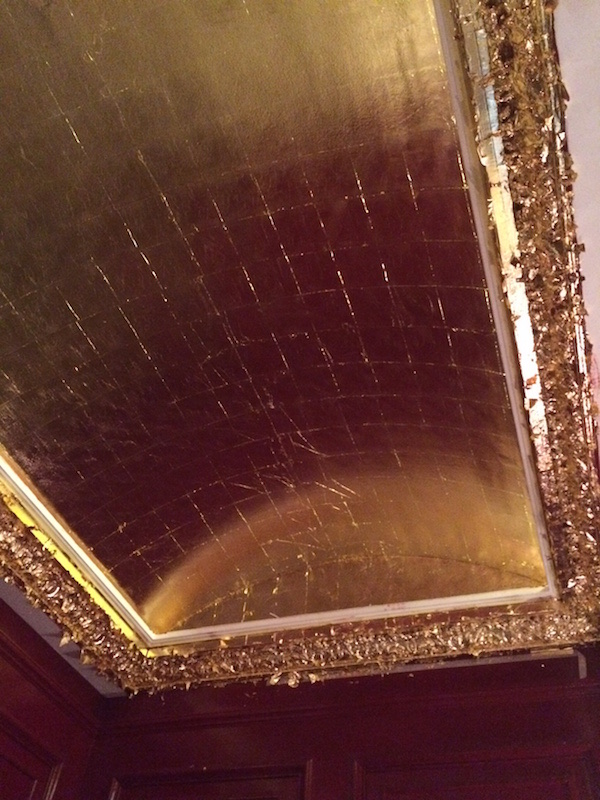
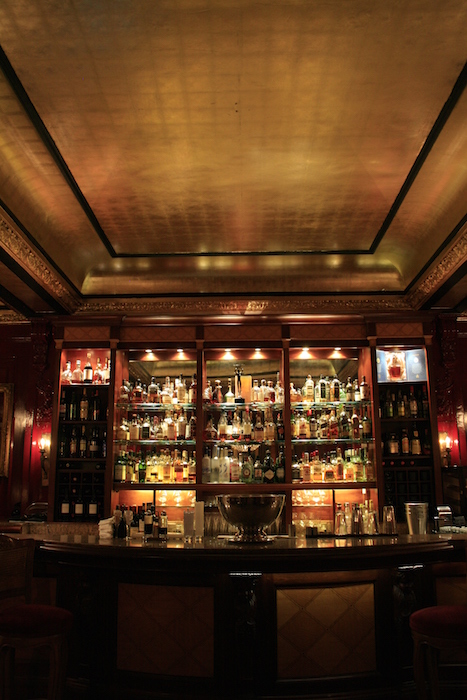
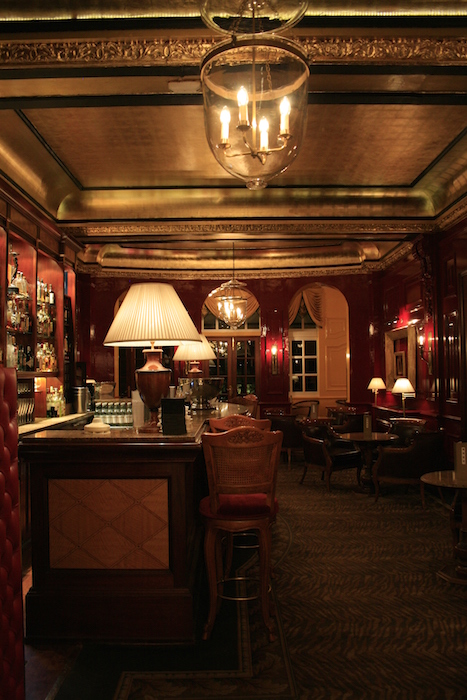
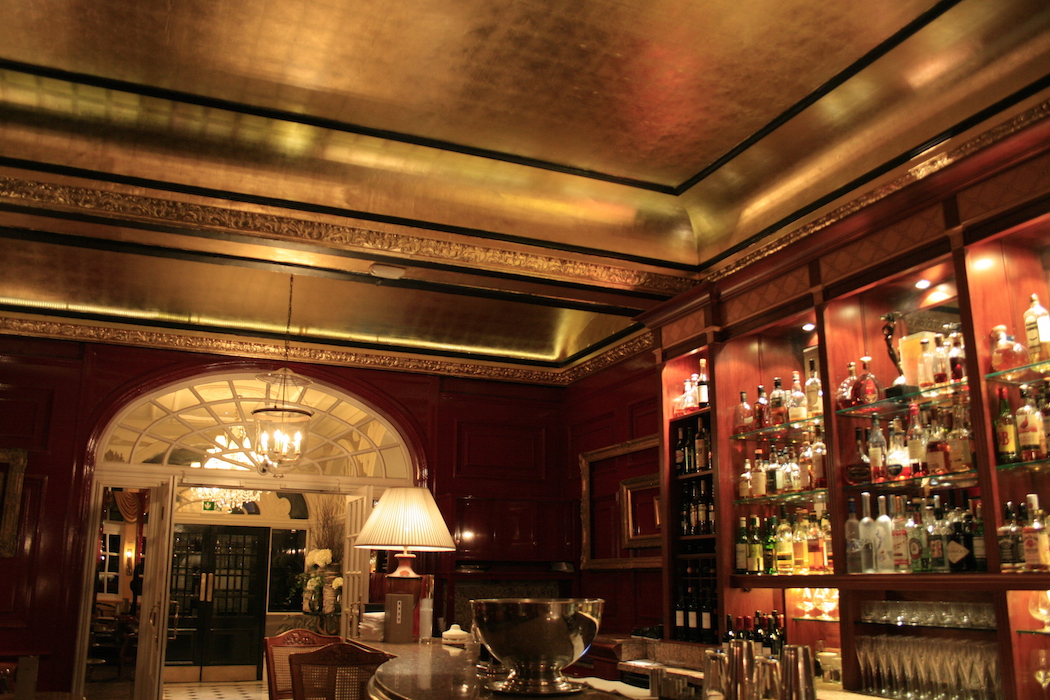
The Goring is one of London’s last remaining family-owned luxury hotels, and it holds a Royal Warrant. Neither of those facts leaves much room for a restoration to look anything less than original. When the hotel came to us, the gilded ceilings above the ground floor dining room and bar had been deteriorating for years, worn down by kitchen heat and the general wear of a hotel that never really closes. The brief was straightforward to state and demanding to deliver: bring the ceilings back to their original grandeur, and do it before the start of the hotel’s busy season.
Heritage gilding restoration briefs like this one tend to share a shape. Something that was once immaculate has faded, tarnished or worn unevenly, the building can’t simply close its doors while the work happens, and the client’s tolerance for anything less than a faithful result is close to zero. The Goring gave us all three at once.
Reading what remains before touching anything
Before a single tool goes near an existing gilded surface, the first job is establishing exactly what condition it’s actually in, not what it looks like from the floor. Tarnish, grime and genuine deterioration of the leaf itself can look similar from a distance and require completely different responses. A surface that only needs cleaning doesn’t need re-gilding, and a surface that’s genuinely failed won’t come back with a clean and a coat of lacquer.
This matters more on older buildings than newer ones. A ceiling that has been up for decades, exposed to heat, condensation and however many rounds of previous maintenance, can hide a substrate that’s in worse condition than it appears once you actually start working on it. We treat that as a real possibility on every heritage job, not an edge case, and price and plan accordingly rather than assuming the surface underneath will behave exactly as expected.
Choosing the right gold for the job
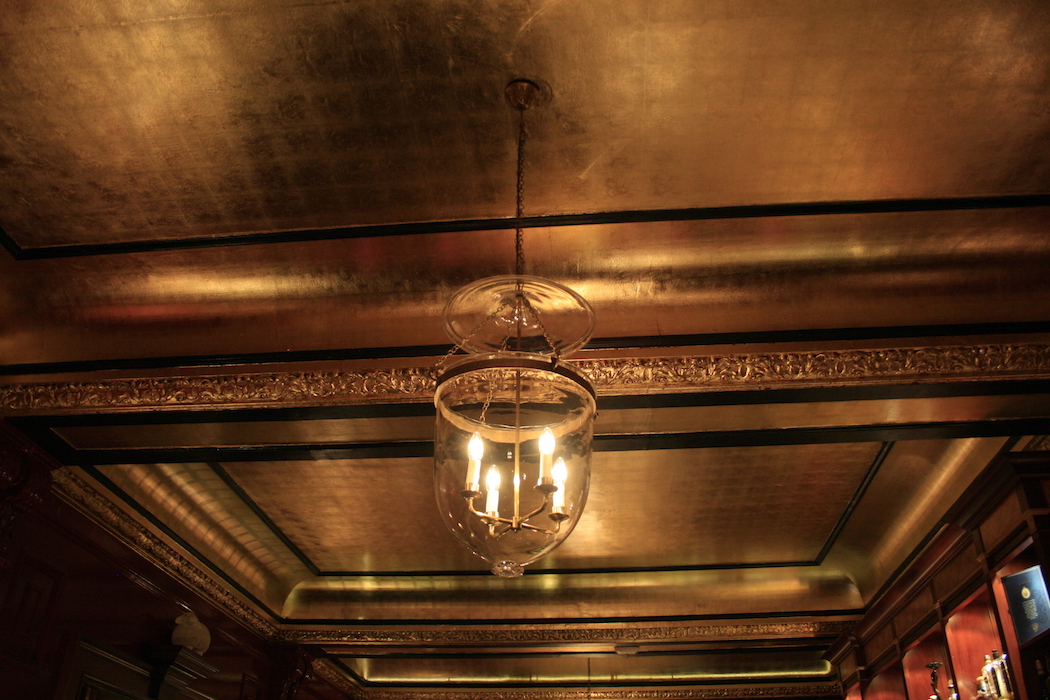
For the Goring’s ceilings, we specified faux gold leaf, sometimes called Schlag metal or Dutch metal, a copper-zinc alloy that closely resembles genuine gold in appearance at a fraction of the material cost. That choice isn’t a compromise. It’s the right specification for a large-scale ceiling area where the finished appearance matters more than the leaf being literally gold, provided the protective side of the job is taken seriously.
And it has to be taken seriously, because faux leaf will tarnish and discolour if left unprotected in a way genuine gold simply doesn’t. We applied multiple coats of Robersons gold lacquer across both ceilings, building up a protective barrier layer by layer. Each coat had to cure fully before the next went on. Trapped solvent under a rushed second coat clouds the finish, and on a ceiling this size, that’s not a mistake you get to quietly fix later. There are no shortcuts available at the lacquering stage, however tight the programme.
Working above a working kitchen
Kitchen heat was the original cause of the deterioration we were asked to fix, and it didn’t stop being a factor just because we were on site. Ceiling work in an operating hotel is difficult under the best of conditions, and a dining room and bar that continue serving guests through most of the working day is not the best of conditions.
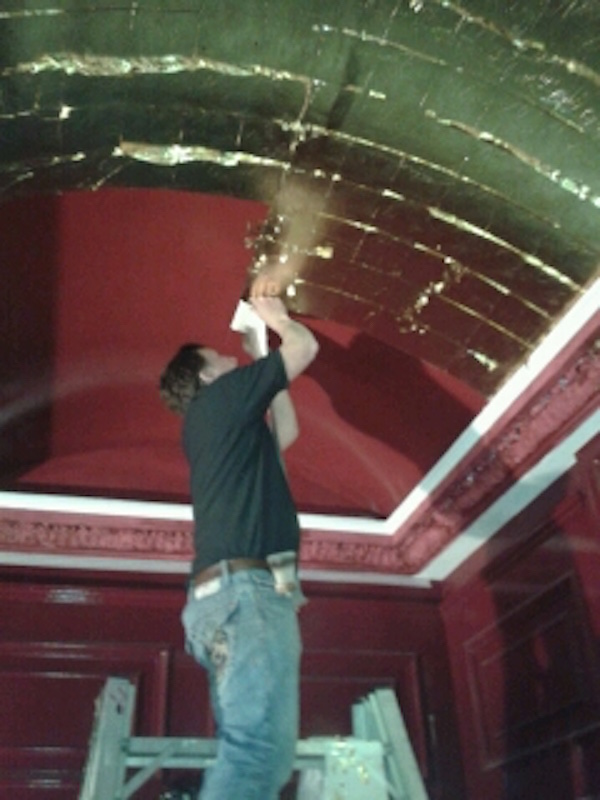
We erected scaffolding in both spaces and worked around the hotel’s service schedule rather than the other way round, which meant a good deal of the laying happened outside normal hours. Overhead gilding is physically demanding in a way that wall or floor-level work isn’t. Every sheet of leaf is being pressed upward against gravity, into a size that has to be at exactly the right tack when the sheet meets it, and there’s no resting the work against a surface to steady your hand the way there is on a vertical face.
Laying leaf against gravity
Timing is the whole discipline in oil gilding, and it becomes less forgiving overhead. Gold size needs to reach the correct tack before the leaf goes on: sticky enough to grip the leaf firmly, not so wet that the leaf sinks in and loses definition, not so dry that it fails to adhere at all. On a wall, a gilder can work a panel at a natural pace and adjust as they go. On a ceiling, the same window has to be judged while working above your own head, holding transfer leaf steady against its own weight and the pull of gravity, and pressing it home before the size moves past its working point.
That’s a large part of why overhead heritage gilding restoration is priced and programmed differently from flat-panel work of the same square footage. The area might be identical on paper. The actual working conditions rarely are.
Every moulding, every recess
The ornamental plasterwork on the Goring’s ceilings included deep mouldings and recessed panels, and every one of them had to be gilded into every crevice, not just across the flat planes that catch the eye from below. We used smaller cut pieces of leaf specifically to work into the detailed areas, since a full sheet sized for open ground simply can’t be pressed cleanly into a tight internal corner without tearing or bridging.
This is the part of restoration work that a photograph from the dining room floor won’t show you, and it’s also the part that determines whether a restored ceiling reads as complete or merely improved. Gold leaf is unforgiving of anything left half-finished. A recess that’s been leafed at the edges but not worked fully into its depth will show as a shadow the moment the light changes, long after the scaffolding has come down.
What restoration asks of an older building
If you’re responsible for a heritage or listed building with gilded surfaces that have started to fade, tarnish or wear unevenly, a few things are worth knowing before you get a quote. First, cleaning and re-gilding are genuinely different jobs with different costs, and the right answer usually can’t be judged accurately from the floor. Second, the age and condition of the substrate underneath the existing gilding is a real variable, not a formality, and a specialist who flags that risk honestly at survey stage is doing you a favour, not hedging. Third, whether the brief calls for genuine or faux leaf should follow from how the surface will be used and protected afterwards, not from which sounds more impressive on paper.
The Goring’s ceilings needed all of that judgement applied at once: an honest read of existing condition, the right material for a space that runs hot and never fully stops operating, and the patience to work every recess properly rather than just the parts that show. That combination, more than any single technique, is what heritage gilding restoration actually asks for.
Frequently Asked Questions
How do you know whether a gilded ceiling needs cleaning or full re-gilding?
Tarnish, grime and genuine deterioration of the leaf itself can look similar from a distance but need completely different responses. The only reliable way to tell is close inspection of the actual surface, not an assessment from the floor. A surface that only needs cleaning doesn’t need re-gilding, and a surface that’s genuinely failed won’t come back with a clean and a coat of lacquer. This is why we read the existing condition properly before quoting, rather than pricing a re-gild by default.
Why use faux gold leaf instead of real gold on a large ceiling?
For The Goring’s ceilings we specified faux gold leaf, also called Schlag metal or Dutch metal, a copper-zinc alloy that closely resembles genuine gold at a fraction of the material cost. That’s the right specification for a large-scale ceiling where finished appearance matters more than the leaf being literally gold, provided the protective lacquering is done properly, since faux leaf will tarnish and discolour if left unprotected in a way genuine gold doesn’t.
Can gilding restoration work happen while a building stays open?
Yes, though it changes how the job runs. At The Goring we erected scaffolding in the dining room and bar and worked around the hotel’s service schedule rather than the other way round, which meant a good deal of the leaf-laying happened outside normal hours. It’s more demanding to programme than working in a closed space, but it doesn’t stop the restoration being done to the same standard.
Why does overhead ceiling gilding cost more than gilding a wall of the same size?
Timing is the whole discipline in oil gilding, and it becomes far less forgiving overhead. Gold size needs to reach exactly the right tack before the leaf goes on, and on a ceiling that window has to be judged while working above your own head, holding leaf steady against gravity, rather than at a natural pace against a vertical surface you can rest work against. The area might be identical on paper to a wall job; the actual working conditions rarely are, which is why overhead heritage gilding is priced and programmed differently.
Does the age of a building affect a gilding restoration quote?
It can, and we treat that as a real possibility to price for rather than an edge case. A ceiling that’s been up for decades, exposed to heat, condensation and however many rounds of previous maintenance, can hide a substrate in worse condition than it appears until work actually starts. A specialist who flags that risk honestly at survey stage, before quoting, is protecting the client from a mid-job surprise, not hedging on the price.